
 Get Weekly Possibilities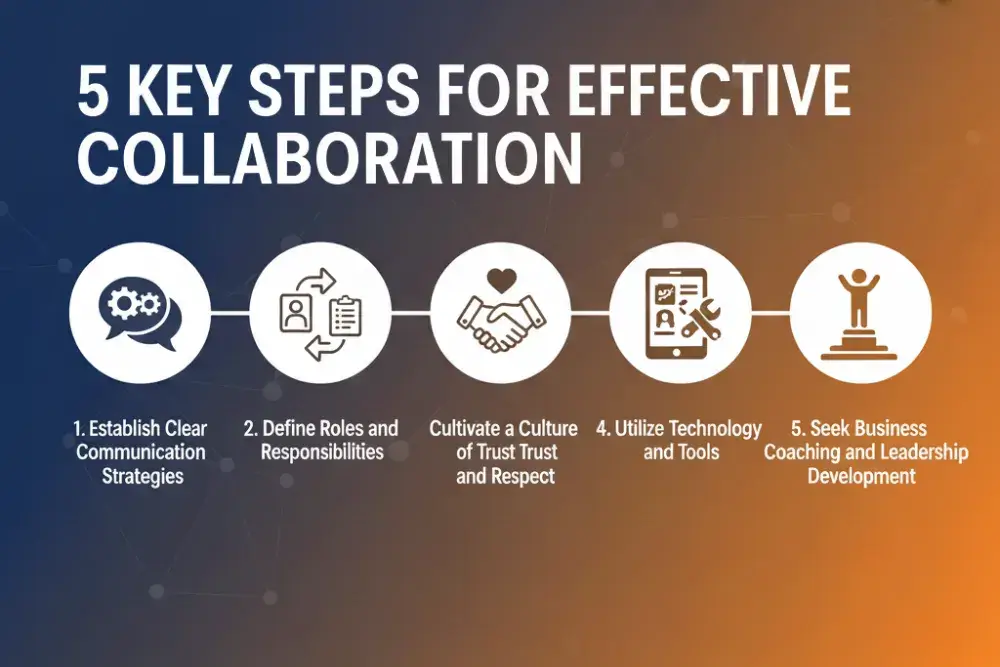
Effective collaboration is no longer optional in modern organizations. As businesses become more complex and interconnected, the ability to work well across teams, departments, and perspectives directly impacts performance, innovation, and morale. Collaboration is not simply about working together—it is about working together well, with clarity, trust, and shared accountability.
For business professionals and leaders, collaboration requires intentional structure and communication strategies. Without them, collaboration quickly turns into confusion, duplicated effort, or stalled progress. The following five steps outline how to build effective collaboration that supports leadership development, strengthens relationships, and drives meaningful results.
Step 1: Establish Clear Communication Strategies
Collaboration begins and ends with communication. When communication is unclear, inconsistent, or assumed, collaboration suffers. Clear communication strategies create alignment, reduce friction, and help teams move forward with confidence.
Effective communication strategies for collaboration include:
- Defined communication channels: Clarify where updates, decisions, and questions should be shared.
- Consistent cadence: Regular touchpoints prevent misalignment and surprises.
- Active listening: Collaboration requires hearing ideas, not just waiting to respond.
Clear communication is not about more meetings—it is about better conversations. Leaders who model clarity set the tone for productive collaboration across the organization.
Example
Regularly scheduled team check-ins that focus on progress, obstacles, and next steps allow everyone to stay aligned. These conversations encourage shared ownership and ensure that issues are addressed early rather than after momentum is lost.
Step 2: Define Roles and Responsibilities Clearly
One of the fastest ways collaboration breaks down is through role confusion. When responsibilities are unclear, tasks are duplicated, deadlines are missed, and frustration grows.
Defining roles supports collaboration by creating structure.
- Clarify ownership: Each task should have a clearly identified owner.
- Align responsibilities with strengths: Assign work based on skills and expertise.
- Reduce overlap: Clear roles prevent wasted effort.
Effective collaboration does not mean everyone does everything together. It means individuals contribute intentionally toward a shared outcome.
Example
On a cross-functional project, one person may own timelines, another content or execution, and another stakeholder communication. When everyone understands their role, collaboration becomes smoother and more efficient.
Step 3: Build a Culture of Trust and Respect
Trust is the foundation of collaboration. Without it, people withhold ideas, avoid accountability, and protect themselves instead of contributing fully.
A collaborative culture requires psychological safety—an environment where individuals feel respected and heard.
- Encourage open dialogue: Ideas should be welcomed without immediate judgment.
- Acknowledge contributions: Recognition reinforces engagement.
- Model respect: Leadership behavior sets cultural expectations.
Trust grows when leaders respond thoughtfully to feedback, address concerns directly, and credit others for success. Collaboration thrives when people feel safe to speak up.
Example
Leaders who actively invite input during discussions and acknowledge ideas—even when they are not used—reinforce a culture of respect. Over time, this leads to more innovation and engagement.
Step 4: Use Tools and Systems to Support Collaboration
Technology can either support collaboration or complicate it. The key is using tools intentionally rather than adding platforms without clarity.
Effective collaboration tools help teams:
- Stay organized: Centralized information reduces confusion.
- Track progress: Visibility keeps work moving.
- Communicate efficiently: Tools should simplify, not replace, communication.
Tools are most effective when paired with clear expectations. Without guidelines, technology can become another source of friction.
Example
Project management systems that clearly outline tasks, deadlines, and responsibilities help teams collaborate asynchronously—especially in remote or hybrid environments—without constant check-ins.
Step 5: Strengthen Collaboration Through Leadership Development
Collaboration is ultimately a leadership skill. Leaders influence how collaboration functions through their communication style, decision-making approach, and ability to manage dynamics.
Leadership development supports collaboration by helping leaders:
- Recognize collaboration breakdowns: Identify where communication or structure is failing.
- Navigate conflict constructively: Address tension without avoidance.
- Set expectations clearly: Align teams around shared goals.
- Model collaborative behavior: Demonstrate accountability and openness.
Leaders who invest in their own development create stronger, more cohesive teams. Collaboration improves when leadership is intentional rather than reactive.
Example
Business coaching or leadership development programs can help leaders refine how they facilitate conversations, delegate effectively, and align diverse personalities toward common objectives.
Why Effective Collaboration Drives Business Success
Organizations that collaborate well move faster, adapt more easily, and solve problems more creatively. Collaboration improves:
- Execution: Clear alignment reduces delays.
- Innovation: Diverse perspectives lead to better solutions.
- Engagement: People are more invested when they feel included.
- Leadership effectiveness: Influence increases through trust.
When collaboration is weak, leaders often compensate by working harder. When collaboration is strong, leaders can focus on strategy and growth.
Supporting Collaboration Through Business Coaching
Many collaboration challenges stem from communication habits, unclear expectations, or leadership blind spots. Business coaching provides leaders with the perspective and tools needed to address these challenges intentionally.
Possibilities Unlimited works with business professionals to strengthen collaboration through leadership development and communication strategies. Coaching helps leaders clarify roles, improve conversations, and create environments where collaboration feels productive rather than exhausting.
If collaboration within your team feels inconsistent or harder than it should be, a coaching session can help you identify what’s getting in the way and where small leadership adjustments could lead to stronger alignment and better results.