 Get Weekly Possibilities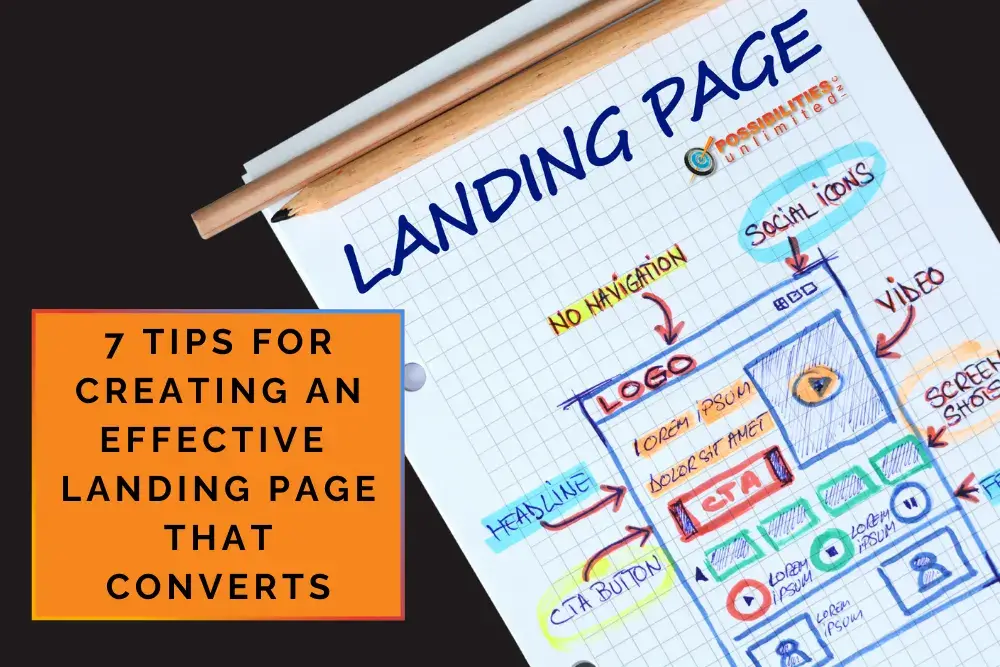
Effective landing page that converts is not about flashy design or clever wording alone—it is a focused communication tool that aligns your message, your audience’s intent, and a clear next step. It is a focused communication tool that aligns your message, your audience’s intent, and a clear next step. For business professionals, a high-converting landing page reflects disciplined thinking, strong leadership decisions, and intentional communication strategies. When done well, it becomes a reliable asset that supports growth rather than a one-off marketing experiment.
1. Know your target audience at a strategic level
Understanding your target audience goes far beyond basic demographics. Effective landing pages are built on clarity about who the visitor is, why they are there, and what problem they are actively trying to solve. Business professionals often make the mistake of writing for “everyone,” which results in messaging that resonates with no one.
To create an effective landing page, you must understand:
- The specific challenge or decision your visitor is facing at that moment
- The language they naturally use to describe that challenge
- The risks or objections that may prevent them from taking action
- The outcome they ultimately want to achieve
This level of clarity allows your page to speak directly to the visitor’s mindset. Business coaching often helps leaders refine this perspective by shifting from internal assumptions to customer-centered thinking, which is foundational for effective communication strategies.
2. Keep the message simple, focused, and intentional
One of the most common reasons landing pages fail to convert is lack of focus. Too many offers, messages, or directions create confusion. An effective landing page has one purpose and guides the visitor toward one decision.
Simplicity does not mean oversimplifying the value. It means removing distractions that dilute the message. This includes:
- Limiting the page to one core offer or outcome
- Using clear headings that reinforce the same message
- Eliminating unnecessary navigation or external links
- Structuring content so the eye naturally flows downward
Strong leadership mirrors this principle. Leaders who communicate clearly and decisively reduce friction and increase follow-through. The same discipline applied to leadership development shows up directly in marketing execution.
3. Write headlines that communicate value, not cleverness
Your headline is the most critical piece of copy on the page. It must immediately answer the visitor’s unspoken question: “Am I in the right place?” Effective headlines focus on outcomes, clarity, and relevance rather than wordplay.
High-performing headlines typically:
- Address a specific problem or goal
- Highlight a meaningful result or benefit
- Use straightforward, professional language
- Align tightly with the traffic source that led the visitor there
Subheadings should reinforce the headline by adding context or specificity, not by introducing new ideas. This layered communication approach reflects strong communication strategies used by effective leaders: say the right thing, then reinforce it clearly.
4. Use visuals to support understanding, not distract from it
Visual elements should enhance clarity, not compete with the message. Images, graphics, or videos should help the visitor understand the offer faster or feel more confident about taking the next step.
Effective visual use includes:
- Images that reflect your actual audience or environment
- Visuals that demonstrate process, outcome, or transformation
- Clean design that supports readability
- Consistency with your brand’s professional tone
For business professionals, credibility matters. Overly generic stock imagery or unnecessary animation can reduce trust. Thoughtful visual choices signal competence and intention—qualities also emphasized in leadership development.
5. Build trust through relevant social proof
Visitors often arrive at a landing page with skepticism. Social proof reduces perceived risk by showing that others have already taken the step and benefited from it. The most effective social proof is specific, relevant, and aligned with the visitor’s situation.
Strong social proof may include:
- Short testimonials tied to a clear outcome
- Client feedback that reflects professional challenges
- Brief case examples focused on results, not hype
- Credentials or experience that reinforce authority
Trust-building is a leadership skill as much as a marketing one. Business coaching often helps leaders identify how credibility is communicated—both on a landing page and in day-to-day interactions.
6. Create calls-to-action that feel like a logical next step
An effective call-to-action does not pressure the visitor; it guides them. The CTA should feel like the natural continuation of the message, not a sudden sales push.
Strong CTAs:
- Use clear, action-oriented language
- Match the commitment level of the offer
- Reduce friction by setting expectations
- Reinforce the value of taking the next step
For professional audiences, softer CTAs that emphasize clarity, insight, or alignment often outperform aggressive language. This mirrors effective communication strategies used by strong leaders—inviting engagement rather than forcing decisions.
7. Test, refine, and improve with discipline
High-performing landing pages are rarely perfect on the first attempt. They improve through observation, testing, and thoughtful refinement. Optimization is not about constant change; it is about intentional adjustment based on real behavior.
Effective optimization focuses on:
- Headlines and subheadings
- CTA placement and language
- Form length and structure
- Content order and emphasis
This process reflects disciplined leadership thinking—measure what matters, adjust strategically, and avoid reactionary decisions. Business coaching often supports leaders in applying this same mindset across marketing, operations, and communication.
Aligning landing pages with leadership and strategy
An effective landing page is not just a marketing asset. It is a reflection of how clearly a business understands its audience, communicates its value, and leads prospects toward a decision. When those elements are misaligned, conversion suffers. When they are aligned, growth becomes more predictable.
Possibilities Unlimited works with business professionals to strengthen clarity, communication, and strategic alignment—skills that directly impact how landing pages perform. For leaders looking to improve conversion without sacrificing credibility, a focused coaching conversation can help connect messaging, leadership thinking, and execution into a more effective system.