
 Get Weekly Possibilities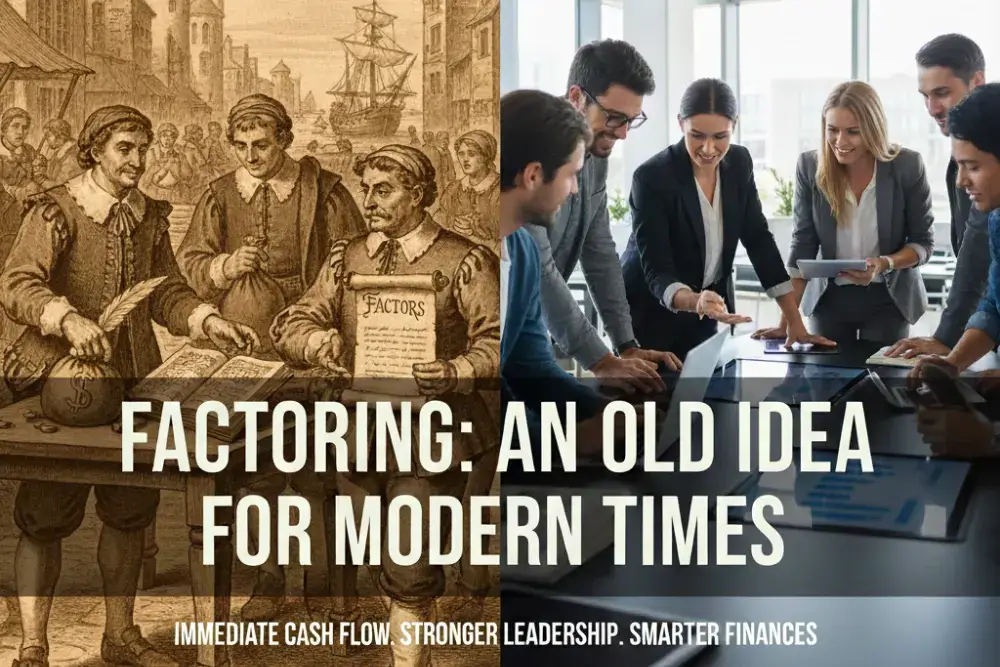
Factoring for modern businesses may sound like a financial concept from another era, but in today’s fast-moving environment it has taken on renewed relevance. At its core, factoring allows a business to convert outstanding invoices into immediate working capital by selling accounts receivable to a third party. While the mechanics are straightforward, the strategic implications go far beyond cash flow. When used intentionally, factoring can support smarter decision-making, stronger leadership, and clearer communication across an organization.
Factoring in the context of modern business operations
Modern businesses operate in an environment where timing matters as much as revenue. Long payment cycles, unpredictable expenses, and growth-related cash demands can strain even profitable organizations. Factoring addresses this gap by accelerating access to capital tied up in receivables.
Unlike traditional lending, factoring is not primarily based on a company’s credit history. Instead, it relies on the creditworthiness of customers. This distinction makes factoring particularly useful for growing businesses, seasonal operations, and organizations navigating transition or expansion.
More importantly, factoring introduces a different way of thinking about cash flow management—one that prioritizes liquidity, flexibility, and strategic alignment rather than reactive borrowing.
Key benefits of factoring for today’s business leaders
Stabilizing cash flow without increasing debt
Cash flow instability is one of the most common stressors for business leaders. Factoring converts earned revenue into usable capital without adding traditional debt to the balance sheet. This allows leaders to meet payroll, invest in growth initiatives, or handle unexpected costs without delaying action.
When leaders are not constantly managing cash shortages, they are better positioned to focus on strategy, team development, and long-term planning rather than short-term survival.
Reducing exposure to late payments and bad debt
Late payments are more than an accounting inconvenience—they disrupt planning, strain vendor relationships, and create internal pressure. In many factoring arrangements, the responsibility for collections shifts to the factor, reducing the operational burden on internal teams.
This shift allows businesses to:
- Spend less time chasing payments and more time serving customers
- Lower financial risk tied to non-payment
- Create clearer boundaries between sales relationships and collections
- Protect internal morale by removing friction-heavy tasks
Maintaining flexibility during growth and change
One of the most overlooked advantages of factoring is flexibility. Businesses can decide which invoices to factor and when, aligning financing decisions with operational needs. This adaptability is especially valuable during periods of rapid growth, seasonal fluctuation, or market uncertainty.
Flexible financing supports leadership agility. When capital access aligns with timing rather than rigid loan terms, leaders can respond faster and with greater confidence.
Factoring as a leadership and communication tool
Although factoring is a financial mechanism, its impact on leadership behavior and communication is significant. Decisions around cash flow directly influence how leaders communicate priorities, manage expectations, and guide teams.
Strengthening financial communication
Using factoring requires leaders to clearly understand and articulate financial realities. This clarity improves communication with internal teams, partners, and advisors. Leaders who can explain why factoring is being used—and how it supports broader goals—build trust and alignment.
Clear financial communication helps teams:
- Understand how their work connects to cash flow
- Plan projects with realistic timing and resources
- Reduce uncertainty during periods of change
- Engage more thoughtfully in decision-making
Encouraging strategic decision-making over reactive choices
Factoring works best when it is part of a broader strategy, not a last resort. Leaders who approach factoring intentionally learn to evaluate timing, opportunity cost, and financial trade-offs more effectively.
This strategic lens extends beyond finance. Leaders who practice proactive decision-making in cash flow management often apply the same discipline to hiring, pricing, operations, and growth planning.
Freeing leadership capacity
When cash flow issues dominate leadership attention, everything else suffers. Factoring can remove that pressure, allowing leaders to focus on people, systems, and vision. This shift often leads to stronger leadership presence, better communication, and more consistent execution.
How business coaching supports smarter factoring decisions
Factoring is not a universal solution, and it is not always the right tool in every situation. This is where business coaching adds value. A skilled coach helps leaders evaluate factoring within the broader context of their business model, goals, and leadership style.
Business coaching supports factoring decisions by:
- Clarifying when factoring aligns with growth strategy
- Identifying potential operational or communication impacts
- Helping leaders weigh factoring against other financing options
- Ensuring financial decisions support long-term leadership objectives
Leadership development and communication strategies are also strengthened through coaching. Leaders gain confidence discussing financial choices, setting expectations, and guiding teams through change with transparency and purpose.
Factoring as part of a modern leadership mindset
Modern leadership requires more than managing numbers—it requires integrating financial tools into a coherent strategy that supports people, performance, and progress. Factoring, when used thoughtfully, becomes part of that integrated approach.
Possibilities Unlimited works with business professionals to connect financial decisions like factoring to leadership development, communication strategies, and sustainable growth. For leaders who want to evaluate whether factoring fits their current reality—or who want to strengthen how financial decisions are communicated and executed—a focused conversation can provide clarity. A free coaching session can help explore how modern financial tools, combined with intentional leadership, support stronger outcomes across the business.